
LIFE-LMS AI-OS
Site blog
About the Chartered Management Institute (CMI), United Kingdom
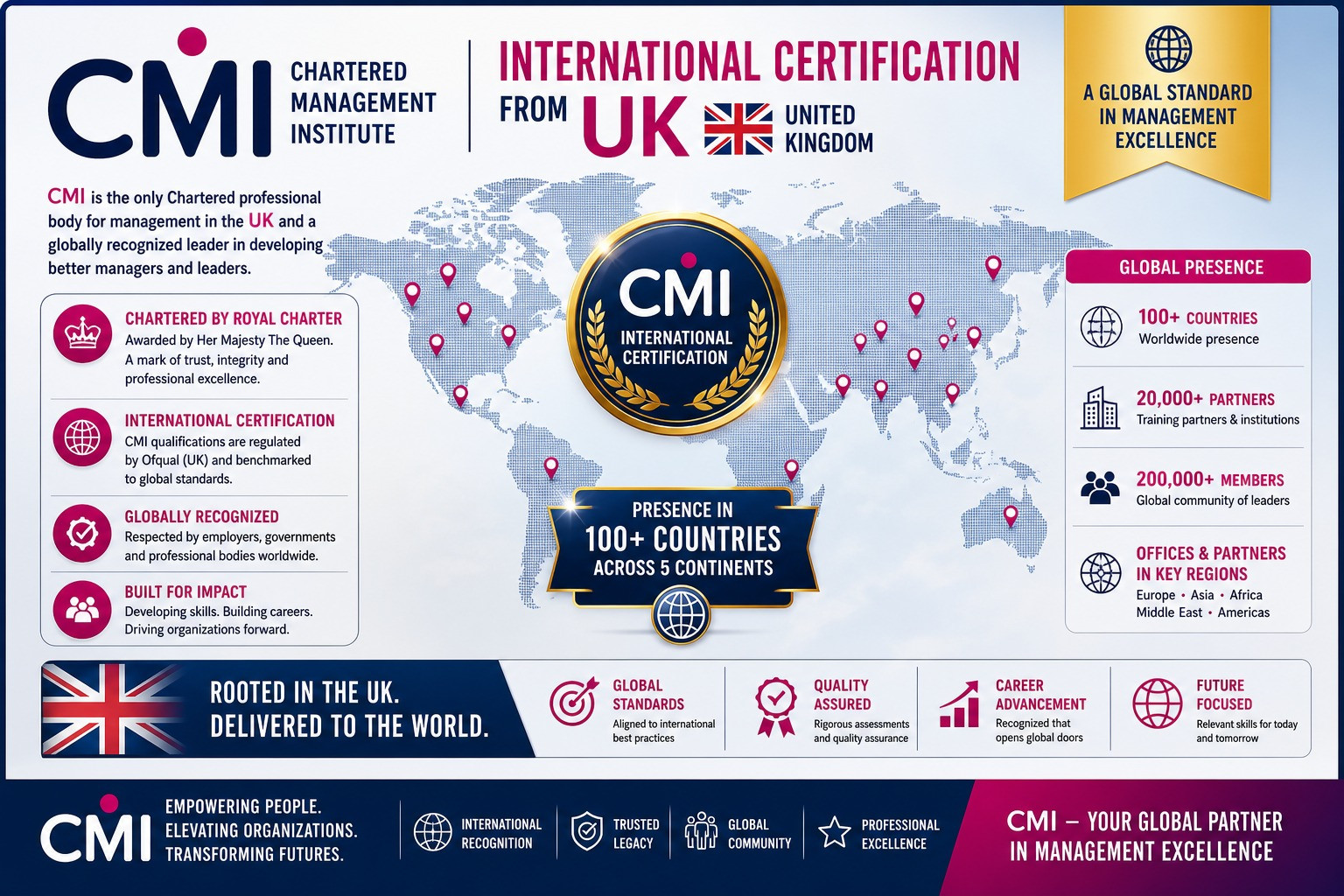
For over 75 years, CMI has been the gold standard in management and leadership development.
Accreditation
Upon completion, you will receive an Executive MBA from a world-class institution. This program is accredited by the Chartered Management Institute (CMI)—the only professional body able to confer Chartered Manager status, the highest recognition of leadership excellence.
Future Ready EMBA Graduates will be granted membership with the Chartered Management Institute (CMI), United Kingdom, which carries the title MCMI.
This esteemed membership provides access to a comprehensive suite of tools, resources, and a robust professional network, all designed to support your continued growth and help you realize your full leadership potential.
CMI has a rapidly growing membership of well over 200,000 members globally. CMI is the go-to professional body for professional development and networking for regional and global members alike.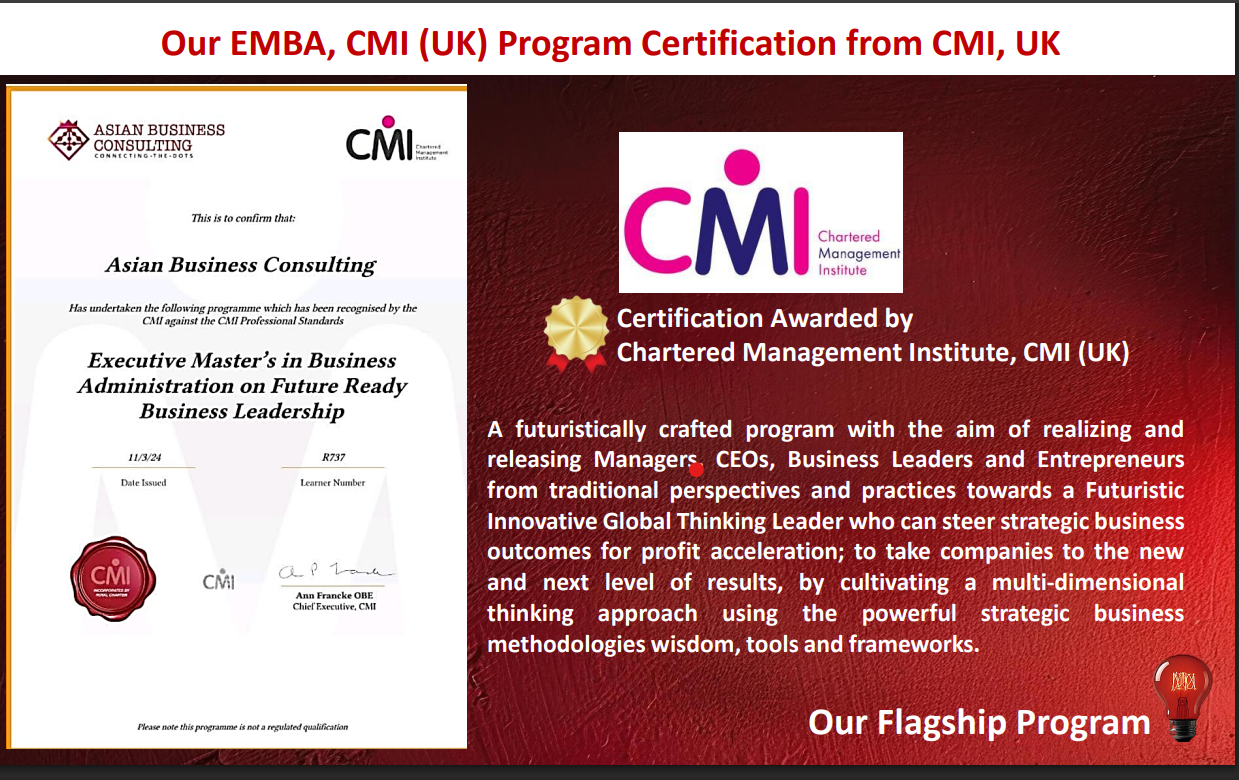
TVB Hong Kong Case Study -
From Media Empire to Business Lesson
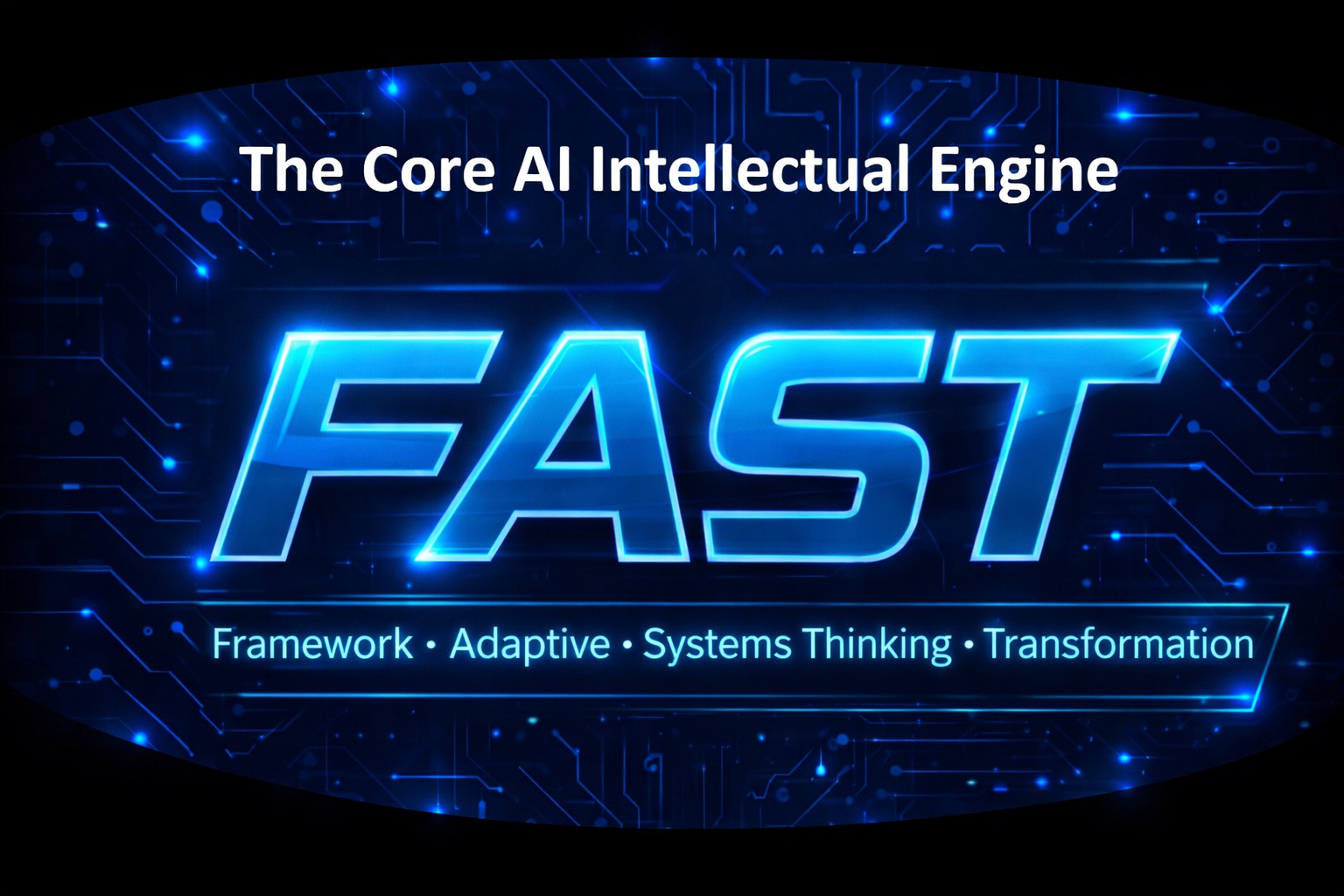
When a Media Empire Drifted from FAST. A Cautionary Tale of Neglected Adaptive Systems Thinking, Failed Transformation, and Systemic Leakage.
Once a dominant force shaping culture across Asia, TVB is now struggling — with fewer new projects, slowing production, and top talent leaving, including the content General Manager, Mr. Eric Tsang. (He announced his resignation during the TVB Anniversary Awards on 4 January 2026.) This isn’t just a media crisis. It is a sobering masterclass in what happens when an organization drifts away from FAST Principles:
- Lack of Adaptive Systems Thinking: TVB rested on past success and failed to evolve its mental models as the media landscape shifted dramatically. Comfort replaced continuous adaptation.
- Failure to Transform: Instead of redesigning its value proposition and business model for the streaming era, TVB clung to old formats. The Transformation pillar of FAST was neglected.
- Systemic Leakage: Talent drained slowly but steadily. Producers, actors, and writers left one by one as belief eroded. This silent outflow of human capital — the most critical stock in any creative system — accelerated decline long before public resignations.
Absence of Collective Wisdom and Leadership Orchestration: Without deliberate stakeholder alignment and courageous B.I.G. (Business Innovation & Growth) leadership, TVB was unable to respond cohesively to the disruptive rise of Netflix, YouTube, and TikTok.
The Hard Truth: No business is too big to fail. No brand is too strong to fade. Success is temporary — only continuous FAST-Driven relevance endures.
When organizations drift away from Framework, Adaptive, Systems Thinking, and Transformation, even legendary empires become vulnerable to systemic leakage and eventual decline.
This is why FAST matters: it is not just a thinking tool. It is the architecture that prevents brilliant pasts from becoming irrelevant futures.
To stay relevant and thrive & thrust into the Future, the FAST Transformation Architecture is your best bet in ensuring today while building tomorrow as it is Systemic, Strategic and Adaptive founded on Framework Timeless First Principles.

Systems thinking is a holistic approach to analysis that focuses on the way that a system's constituent parts interrelate and how systems work over time and within the context of larger systems. The systems thinking approach contrasts with traditional analysis, which studies systems by breaking them down into their separate elements.
Systems thinking can be used in any area of research and has been applied to the study of medical, environmental, political, economic, human resources and educational systems, among many others.
Characteristics of systems thinking
According to systems thinking, system behavior results from the effects of reinforcing and balancing processes. A reinforcing process leads to the increase of some system components. If reinforcement is unchecked by a balancing process, it eventually leads to collapse. A balancing process is one that tends to maintain equilibrium in a particular system.
Attention to feedback is an essential component of systems thinking.
For example, in project management, the prevailing wisdom might prescribe the addition of workers to a project that is lagging. However, in practice, that tactic might have actually slowed development in the past. Attention to that relevant feedback can enable management to look for other ways to resolve the lag, rather than wasting resources on an approach that has been demonstrated to be counterproductive.
Established tools for systems thinking
Systems thinking uses computer simulation and a variety of diagrams and graphs to model, illustrate and predict system behavior. Some available systems thinking tools include the following:
- The behavior over time graph, which indicates the actions of one or more variables over a period of time.
- The causal loop diagram, which illustrates the relationships between system elements.
- The management flight simulator, which uses an interactive program to simulate the effects of management decisions.
- The simulation model, which simulates the interaction of system elements over time.
History of systems thinking
Systems thinking originated in 1956 when Professor Emeritus Jay W. Forrester founded the System Dynamics Group at the MIT Sloan School of Management.